 Unreal Cloud Docs
Core Concepts
Organizations, projects, presets, builds, and artifacts — and how they fit together.
A quick tour of the building blocks you'll see everywhere in Unreal Cloud.
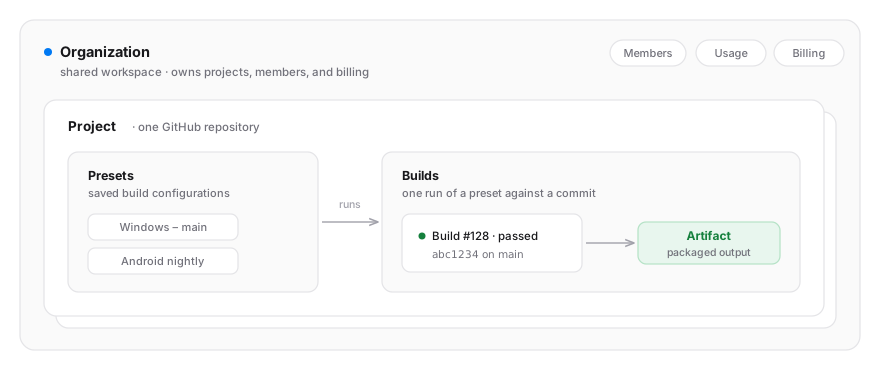
| Concept | What it is | Belongs to |
|---|---|---|
| Organization | Top-level workspace: projects, members, billing | — |
| Project | One Unreal Engine game, one GitHub repository or Perforce depot | Organization |
| Preset | Saved build configuration: platform, engine version, trigger, tests | Project |
| Build | One run of a preset against a specific commit | Project |
| Artifact | Packaged output of a successful build | Build |
Organizations
An organization is the top-level workspace. It owns projects, members, and billing. You can belong to several organizations, and each one is billed independently. Members have one of two roles — admin or user — described in Members and roles.
Projects
A project represents one Unreal Engine game, connected to one GitHub repository or Perforce depot. Everything build-related — presets, builds, usage — lives inside a project.
Presets
A preset is a saved build configuration: which platform to build for, which Unreal Engine version to use, what triggers a build (manual, push, or pull request), and whether to run automation tests afterward. A project can have as many presets as it needs — for example one per platform, or one per branch. See Presets.
Builds
A build is one run of a preset against a specific commit. Each build runs on a dedicated cloud machine, checks out your repository, compiles and packages the project, optionally runs your tests, and uploads the packaged output as a downloadable artifact. Builds move through statuses from queued to passed, failed, or canceled — see Build lifecycle.
Artifacts
The packaged output of a successful build. Artifacts are stored by Unreal Cloud and can be downloaded from the dashboard at any time. Stored artifacts count toward your storage usage.
Usage and billing
Two things are metered: compute (vCPU-minutes your builds consume) and storage (GB-hours of artifacts kept). Plans also include licensed dimensions such as seats and build concurrency. See Usage and Billing.